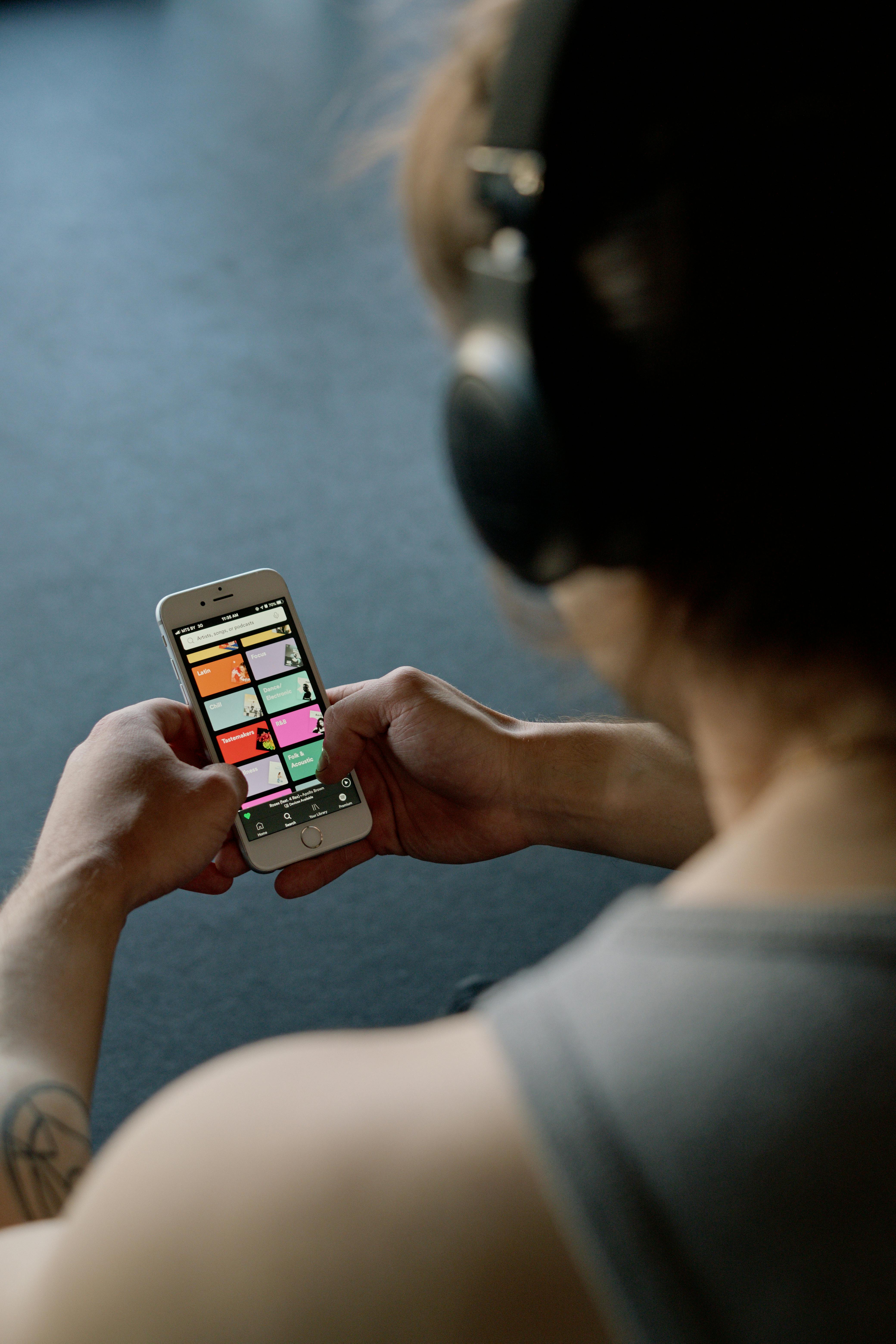

Most people assume scrolling at the gym just makes workouts “a little longer.”
But when you zoom out, the cost is much bigger — not just in minutes, but in the quality of your training, the consistency of your progression, and even the way your brain handles effort.
Phone addiction at the gym doesn’t just waste time.
It quietly stalls your progress.
Let’s break down what you actually lose.
Most people check their phone between every set.
Not for long — just 20–40 seconds, maybe a minute.
But those tiny gaps stack up.
Let’s do the math.
A realistic estimate is 45–90 extra seconds per set.
Now multiply:
15 sets × 60 seconds = 15 minutes lost
15 sets × 90 seconds = 22 minutes lost
That’s 15–22 minutes added to every single workout.
If you train 4 times a week?
That’s 52–76 hours a year.
Basically two to three full days of your life gone, just scrolling during rest periods.
And that’s not counting the time lost restarting your focus each time your attention breaks.
Every time you check your phone, your brain exits “training mode” and enters “dopamine mode.”
You go from internal focus (form, breathing, tension) to external stimulation.
This causes two major problems:
If your plan said 90 seconds, but you scroll for 4 minutes without noticing, here’s what happens:
Which is why you sometimes feel “weak out of nowhere” halfway through a workout.
You didn’t get weaker.
Your session just lost rhythm.
When you train with focus, your brain recruits muscles more efficiently.
When you train distracted:
This is why a distracted workout feels “meh” even if you technically finished it.
It sounds dramatic, but it’s true.
Scrolling kills momentum, and momentum is what dictates whether you:
Studies on “micro-distraction” show that when people get distracted mid-task, they are 37% more likely to cut the task short.
If you skip just one exercise per workout because you're mentally checked out…
That’s:
Nearly 200 exercises gone.
And those skipped sets usually happen on:
…a.k.a. the exact things people “intend to do more of.”
You don’t wake up one day suddenly weaker.
What actually happens is a slow decline in progression quality:
When your mind is scattered, the quality of each rep drops.
Which means less muscle stimulation and less progress.
A workout stretched from 50 minutes to 80 minutes simply won’t feel as sharp.
Phones break the weekly progression patterns your body needs:
These micro-progressions add up to transformation.
But distractions erase them.
Scrolling activates the same dopamine pathways that make you more impatient and less tolerant of effort.
That’s why after 10 minutes of scrolling during a workout, the rest of your lifts feel harder.
You’re not physically drained — your brain is.
This is the part no one talks about.
When your brain is constantly jumping between worlds — gym → phone → gym → phone — your workout loses its identity.
It no longer feels like:
Instead, it feels disjointed and noisy.
People often say:
“I don’t enjoy the gym like I used to.”
But the problem isn’t the gym.
It’s that their attention is never fully in the room.
Your brain can’t feel the reward of training when it never settles into the session.
Let’s put it plainly.
If you use your phone during workouts, you’re losing:
And the biggest cost isn’t time — it’s lost momentum.
Momentum is everything in fitness.
Lose that, and everything stalls.
You don’t have to be a monk.
You don’t need a strict digital detox.
You don’t need to train like a Navy SEAL.
Just fewer interruptions.
A workout without distractions is:
And the progress compounds.
Little by little, set by set, week by week.